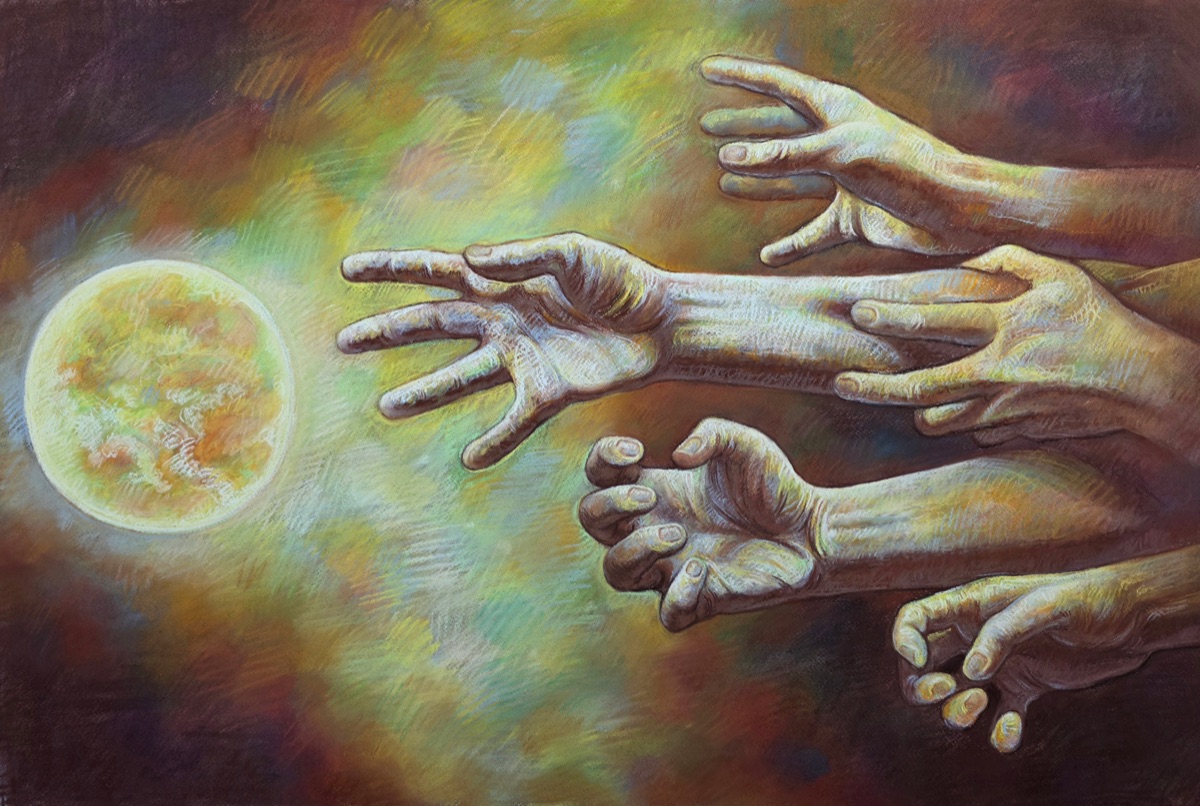
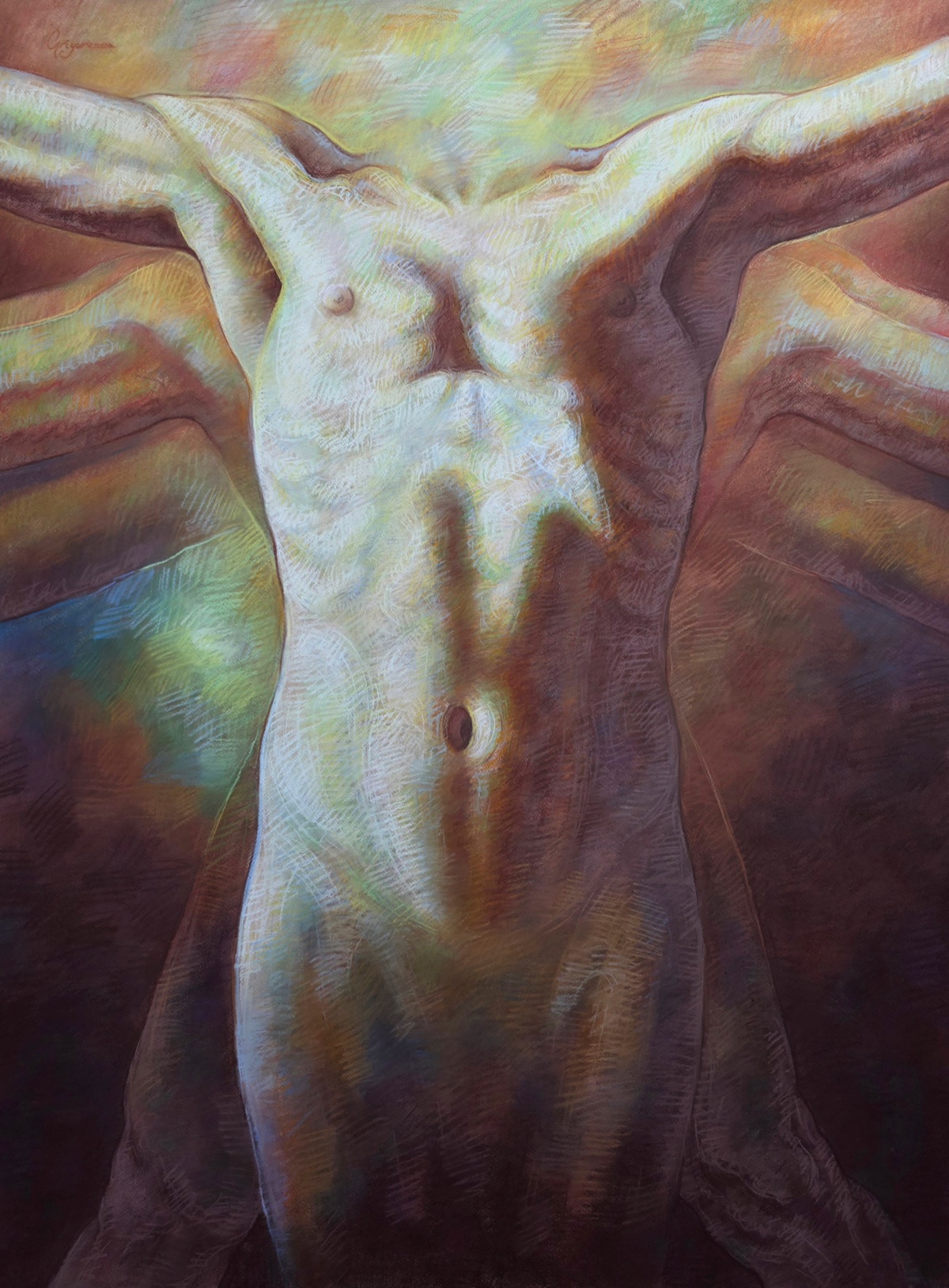
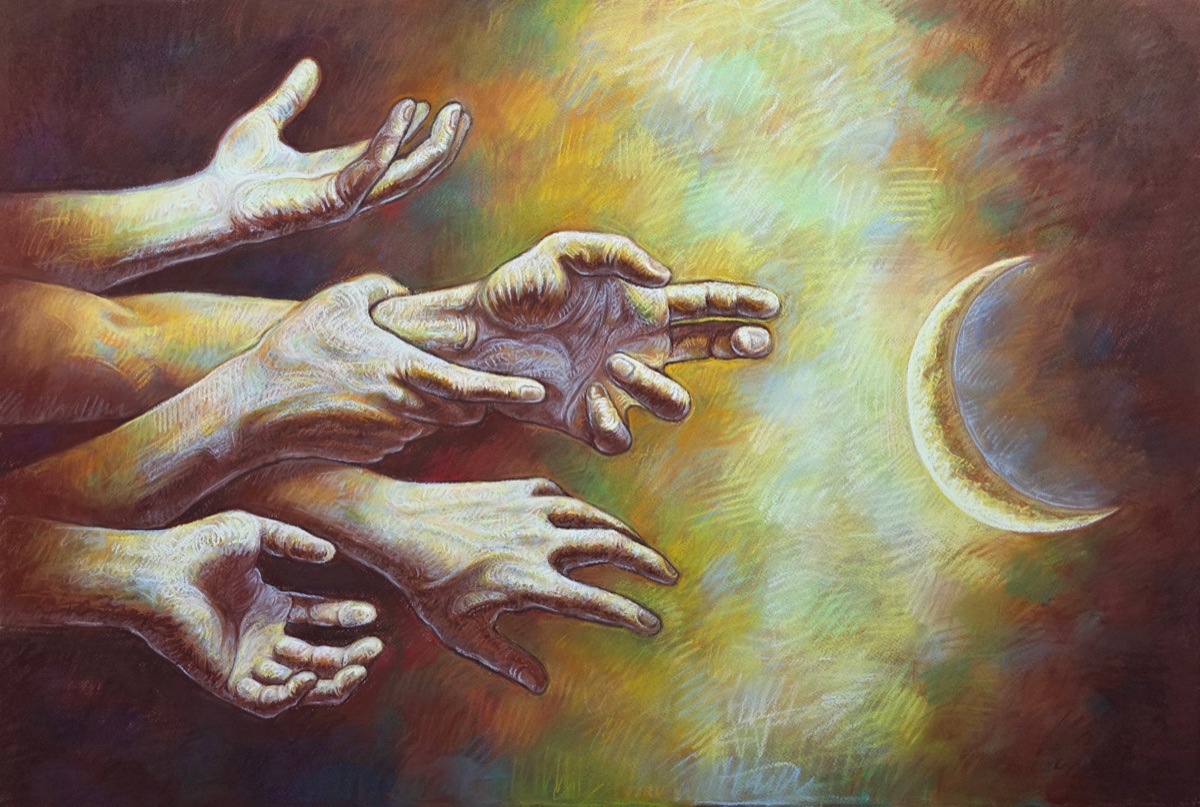
Dawn of Man is a triptych built around the idea of beginning and end, two extremes of human existence that, although seemingly opposed, are presented as belonging to the same moment.
At the opposite ends of the composition appear the sun and the moon, symbols of fundamental poles of existence: beginning and end, birth and disappearance, light and darkness. Between them, the human figure stretches across all three panels, becoming the link between these two limits of existence. The figure is captured in a state of transition, suspended between what begins and what will inevitably come to an end.
The position of the body simultaneously references Leonardo da Vinci’s Vitruvian Man and the image of the Crucifixion of Jesus. The first introduces ideas of harmony, proportion, and order, presenting the human being as both a measure and an expression of the relationship between the individual and the universe. The second brings into the same figure the ideas of suffering, sacrifice, and inevitable destiny.
These two seemingly contradictory images meet within the same human form. Man therefore becomes a space of contradictions: capable of harmony, yet condemned to suffering; standing at the beginning of existence, while already carrying the awareness of its eventual end.
By stretching the body from one end of the triptych to the other, beginning and end become simultaneous. Birth and death are no longer presented as two separate moments, but as two inseparable limits of the same existence.
Dawn of Man thus becomes a reflection on the human condition and on the paradox of existence: from the moment life begins, its ending is already present. Between these two extremes unfolds everything it means to be human, harmony and suffering, order and chaos, creation and disappearance.