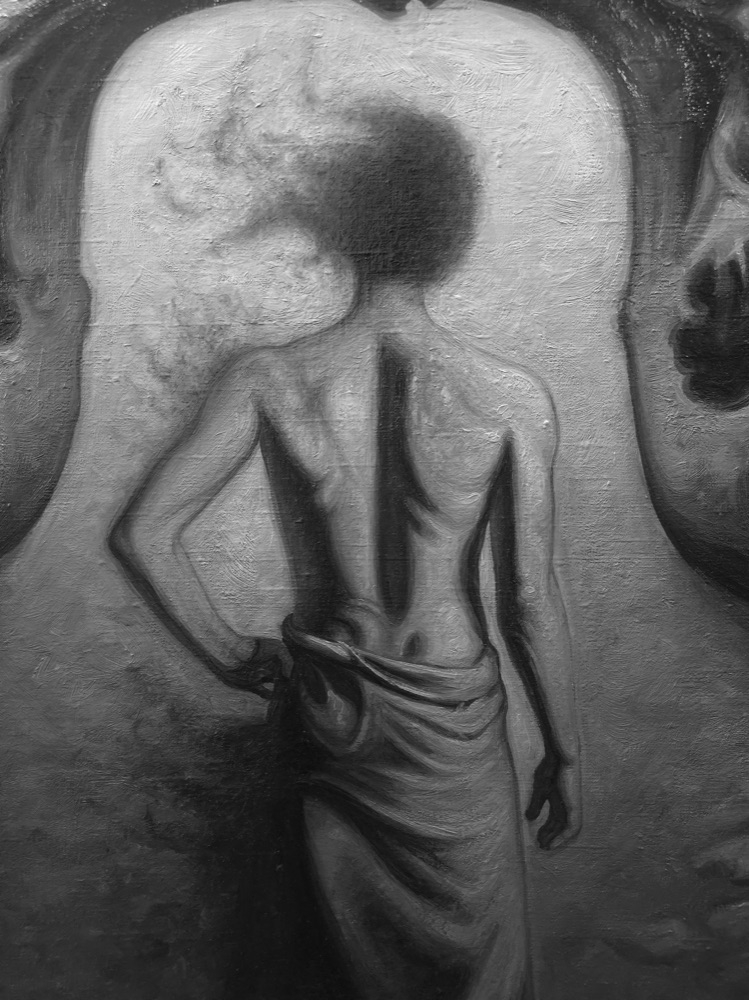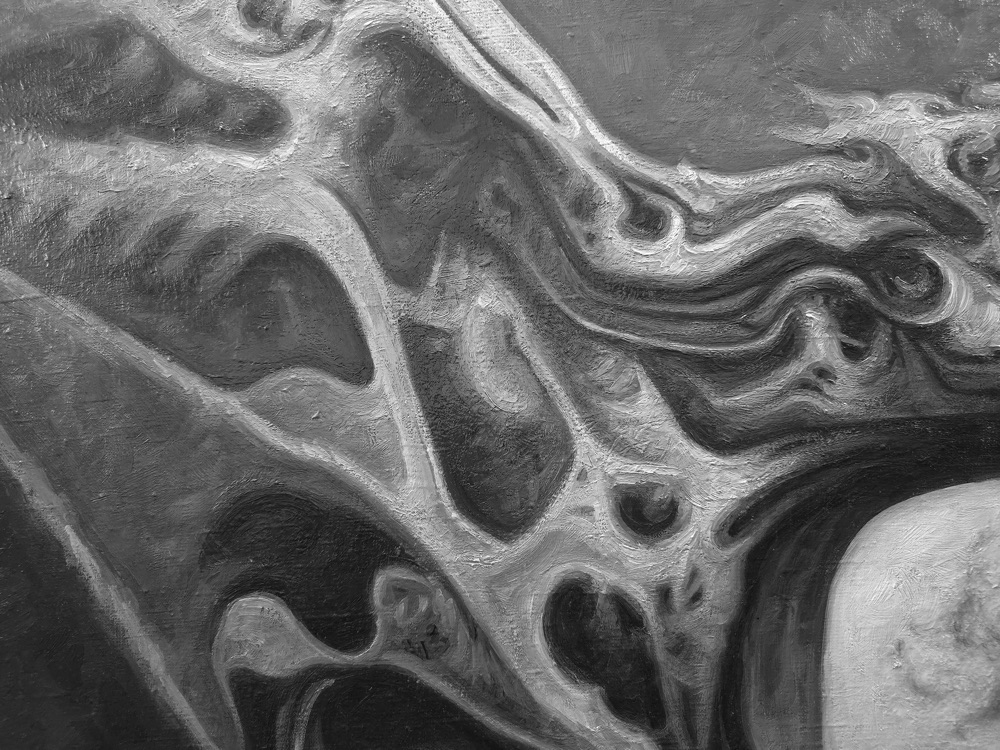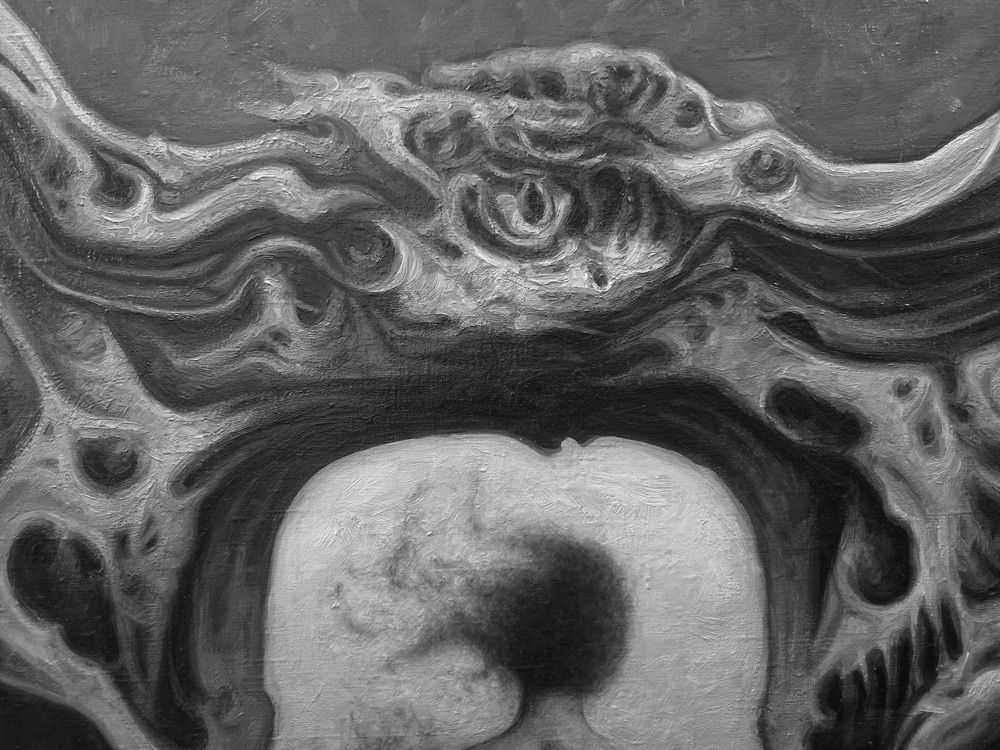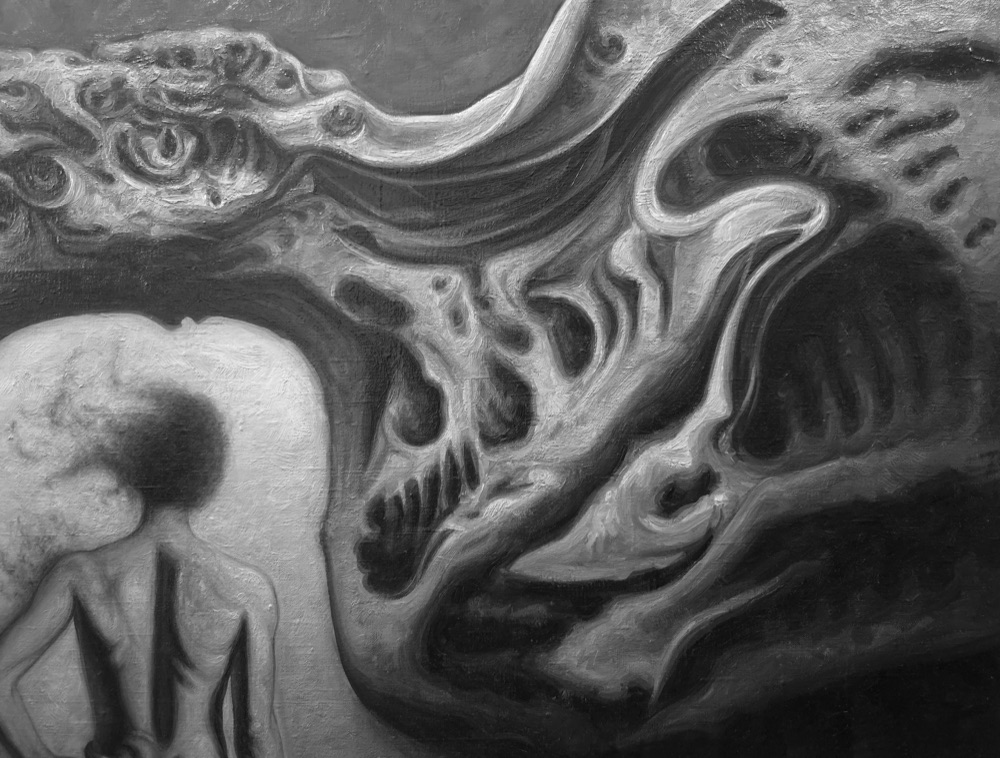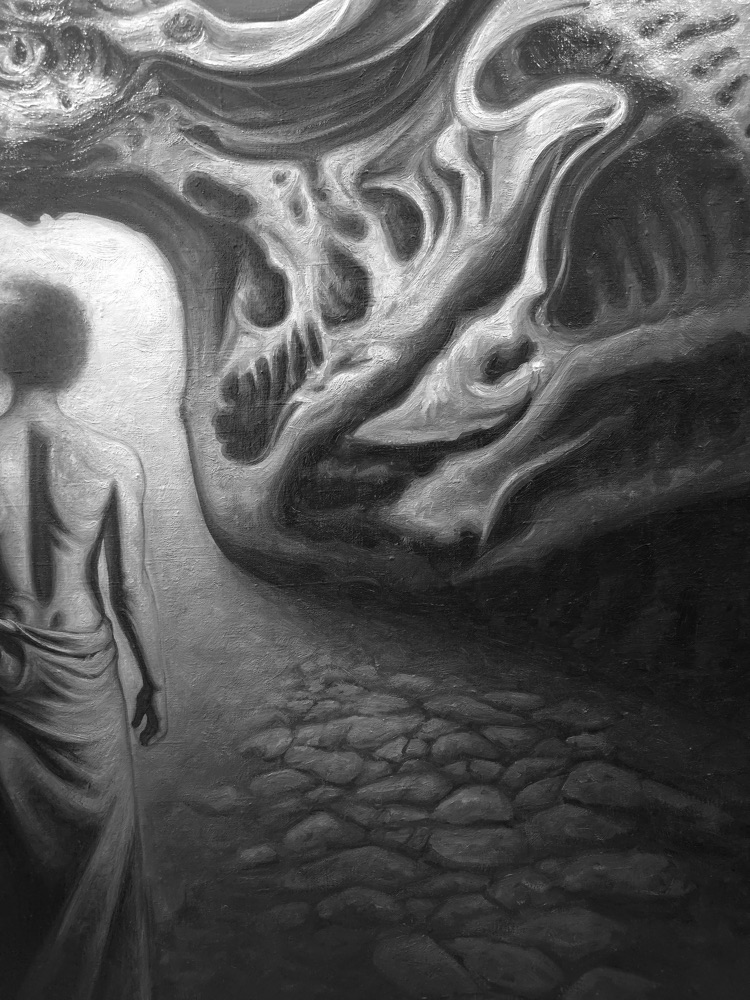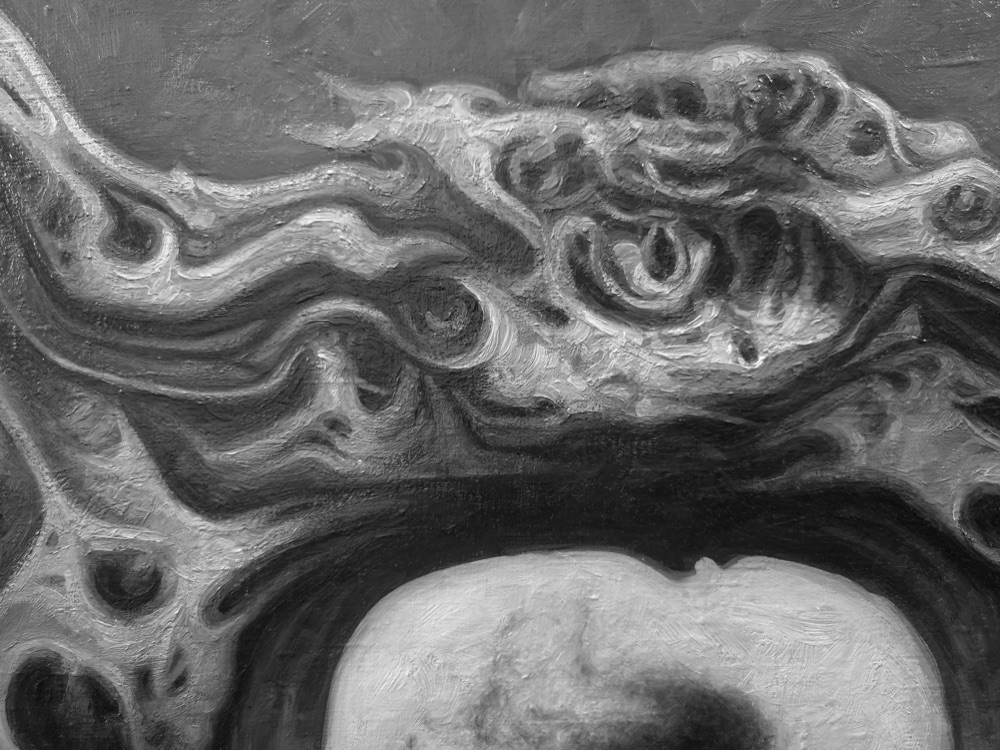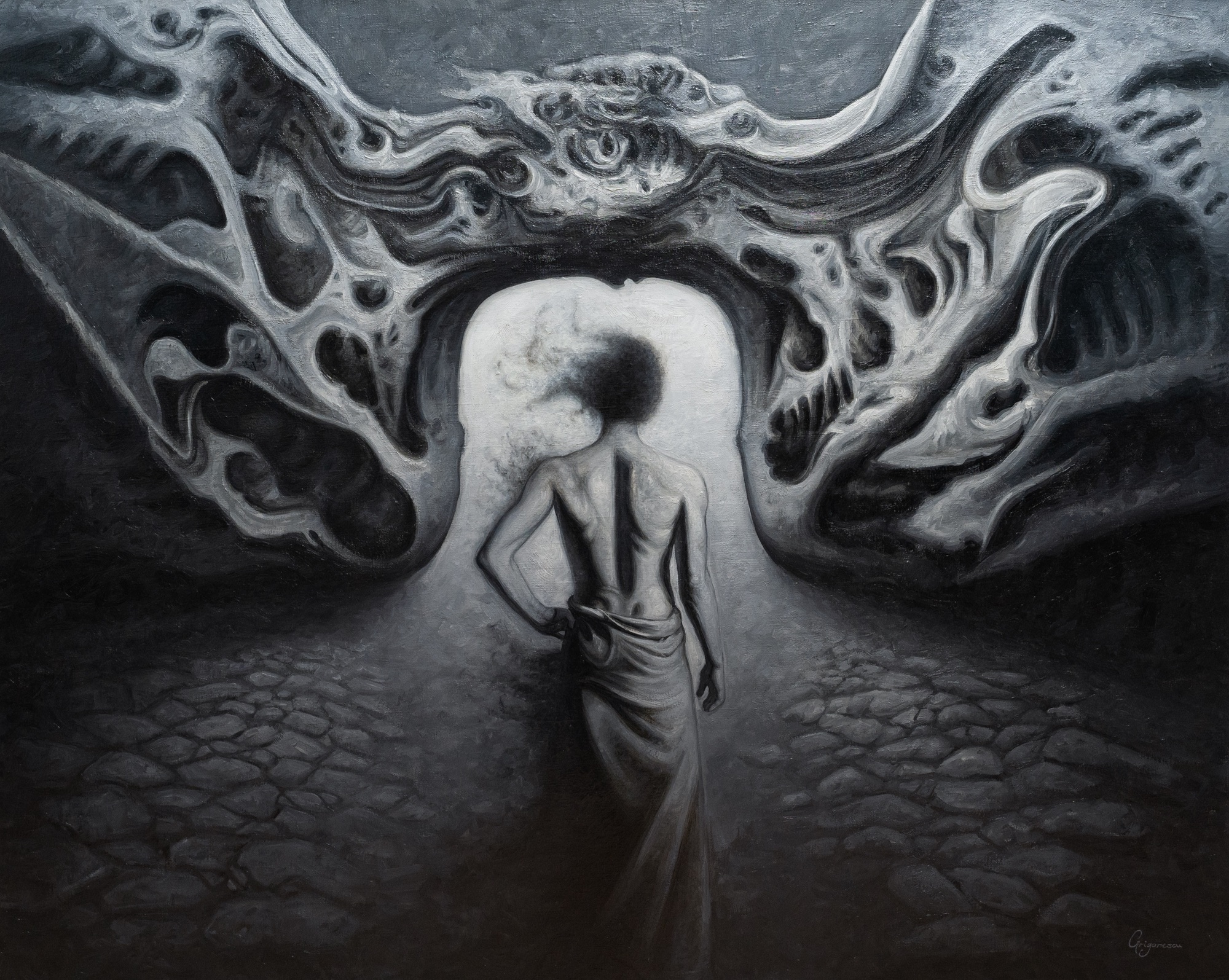
The Gates of New Perception explores the idea of a threshold not only as a physical passage, but as a moment of transformation in the way reality is perceived and understood. The gate becomes a symbol of profound change, marking the point where what we once were begins to dissolve, making room for a new form of the self.
The figure stands at the boundary between two states: one familiar and defined, the other unknown, filled with both possibilities and uncertainty. His position expresses the hesitation between the desire to move forward and the need to preserve what feels familiar. Yet the gate is not simply a passage toward something new, but also a psychological barrier, a boundary shaped by our own fears, memories, and perceptions.
The figure’s body appears to dissolve into smoke, suggesting that the transformation has already begun. Even if the mind continues to hesitate, the former identity can no longer remain intact. In moments of transition, the boundaries between what we are and what we are becoming become unstable, turning identity into a process rather than a fixed form.
The fluid and uncertain shape of the gate reflects the subjective nature of perception itself. We do not experience the world only as it is, but also through what we project onto it: our fears, hopes, and expectations. The gate therefore becomes both an external object and an internal construction.
In this sense, the work speaks about one of the fundamental experiences of existence: confronting change. Every threshold requires the loss of something familiar, but also carries the possibility of renewal. Crossing it does not simply mean abandoning the past, but accepting that our identity is constantly transforming.